A Most Dangerous Nomination: Russell Vought
originally published: 6 February 2025
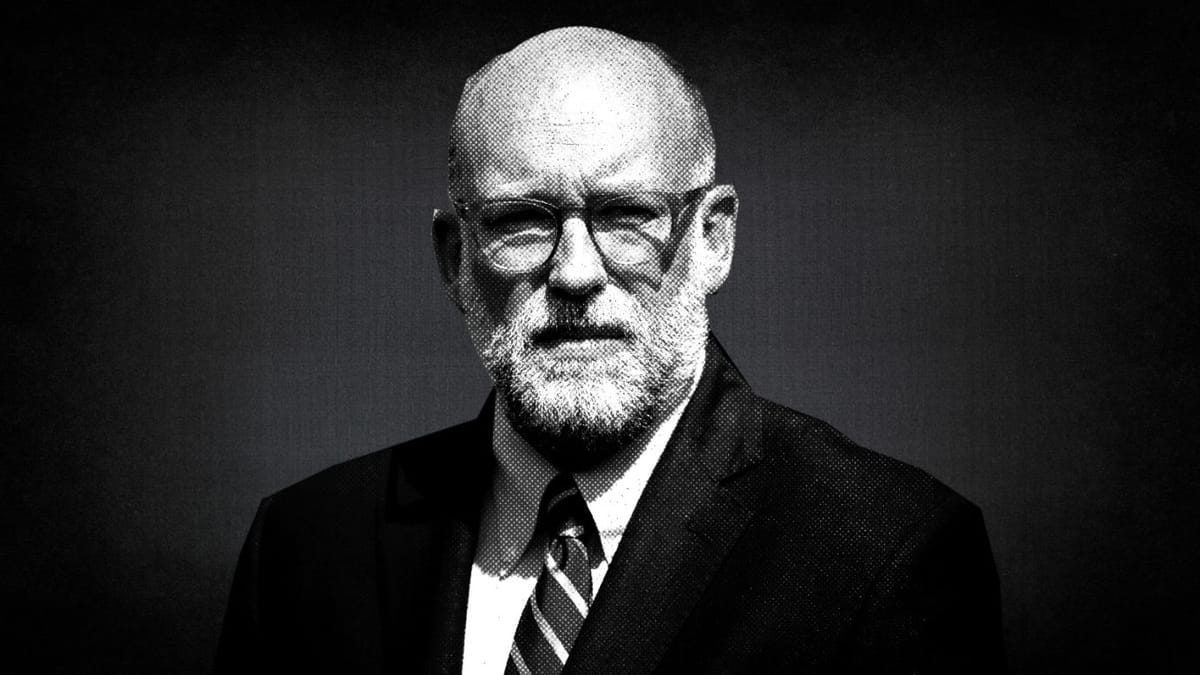
Today, the Senate will likely confirm Russell Vought as the head of the Office of Management and Budget (OMB). Under a normal presidency, the actions currently being undertaken by the Department of Government Efficiency (DOGE) would be the responsibility of the OMB. The OMB turns the President’s ideas into realities; it is responsible for the federal budget; it supervises the wider government, dictating the policies, rules, funding, and spending of all federal agencies; it is responsible for the coordination and creation of executive orders (EOs) and executive legislative proposals; and it is the main line of communication between the executive and legislative branches of government.
Given the distraction of DOGE and the other personalities nominated, it is easy to overlook the OMB, but out of all of Trump’s political appointees, Vought is the most dangerous.
There is no question that Vought appears qualified to take over the OMB. Vought served as Director of the OMB during Trump’s last term, and he has the requisite experience and skillset to do the job. His aptitude and resume is a stark contrast to the cartoonish incompetence of Pete Hegseth, Kash Patel, and RFK Jr. But it is precisely Vought’s competence that makes him such a threat. Vought is a radical ideologue who has no intention of preserving the American government or adhering to its Constitution.
The Senate’s role in confirming presidential appointments, as outlined in The Federalist Nos. 76-77 (Alexander Hamilton), is to ensure stability in the administration and to prevent the appointment of unfit characters. The original idea was that a President would be ashamed to present someone who was unqualified or put forward purely to advance his own interests, knowing that such a nominee would be publicly rejected if forced upon the Senate. The system is not working as intended. The “portion of virtue and honor among mankind” which has “been found to exist in the most corrupt periods of the most corrupt governments” cannot be found in the current American Senate. The suggestion “that [the President] could in general purchase the integrity of the whole [Senate]” is no longer “forced and improbable.” It is almost certain that Vought will be confirmed by the Senate.
The professional experience which qualifies Vought as technically-fit for office also demonstrates why he should be disqualified.
Vought is not a Fox News anchor. He is a savvy political operator boasting a long career working both with and within the Republican Party. Vought started as a low-level staffer, eventually becoming a congressional aide for the now-retired Senator from Texas, Phil Gramm. Following his stint with Senator Gramm, Vought continued to work on and off the Hill. He served as the Executive Director for the House Republican Study Committee and then the Policy Director for the House Republican Conference—two groups associated with the more conservative wing of the GOP. During Obama’s first term he joined the lobbying arm of the Heritage Foundation, Heritage Action, before accepting a position with the Trump administration in 2016. In government, Vought served as Deputy Director of the OMB before stepping up to be director in the last year or so of the administration.
Despite his relatively short time in office, Vought made a big impact and demonstrated what the OMB can achieve with the right leadership. It was Vought who controversially redirected funds from the Pentagon to the border wall after Congress rejected Trump funding proposal. It was Vought who delayed military aid to Ukraine to pressure the Ukrainian government to criminally investigate Joe and Hunter Biden. It was Vought who was the major advocate for Schedule F (now Schedule C/P)—the policy which makes career civil servants more easily removable by the President. When Biden won the 2020 election, it was Vought who deliberately tried to stall and sabotage the transition. Vought demonstrated how powerful the OMB can be.
After leaving office, Vought became more ideologically driven. He founded his own Christian Nationalist organisation, the Center for Renewing America, which aimed to “renew a consensus of America as a nation under God" and keep the Trump political movement alive. While working with his organisation, he also wrote the section on EOs for the Project 2025 policy agenda. Privately, he led the effort to write the 180-day playbook[1] for the next Trump administration which has still not been made public. In 2024, recordings were leaked of Vought admitting that he had already drafted hundreds of EOs and regulations for the President, including one outlining the mass deportation of over 20 million people.
In May of last year, Vought signed on to be the Policy Director for the Republican 2024 platform committee, without objection, despite his public ties to Project 2025. Today, he will be confirmed as the Director of the OMB.
When Vought speaks about the Constitution, he has a strong emphasis on the original intent of the founders. However, Vought is not a constitutional originalist. Vought describes himself as a “post-constitutionalist,” a term that requires some unpacking.
Today’s Republican party is intellectually distinct from Reagan revolution or even the Tea Party. There are two schools which ideologically dominate the contemporary Republican party: the East Coast Straussians and the West Coast Straussians. These two groups hate each other, and predictably, neither group faithful adheres to the political thought of Leo Strauss.[2] Strauss himself wasn’t all that interested in electoral politics, but he was very interested in practical, American, liberal democracy. Modern Straussians are united by the concern that the United States has lost its connection to the self-evident truths expounded in the Declaration of Independence, and they agree that the consequences of rejecting the natural right upon which America was founded have been disastrous. Beyond that, there is not much they share. East Coast Straussians tend to be Never Trumpers, and West Coast Straussians are MAGA Evangelists. Russell Vought, a West Coast Straussian, has literally described Donald Trump as a “gift from God.”
West Coast Straussians are more politically active and populist. They are aggressive in their rhetoric, invoking the language of war and revolution. They believe that America is already in the final stages of a civil war, with progressives on the cusp of destroying the fabric of the nation. By West Coast Straussians account, the eternal laws and morals enshrined in the country’s founding documents have been destroyed by progressives, alienating America from the timeless spirit it once embodied. As a result, West Coast Straussians are not interested in conserving or preserving anything. They are convinced there is nothing left to preserve. They believe the government is compromised, the universities are compromised, the media is compromised, and the legal system is compromised. As such, all existing structures must be ripped apart and remade.
This ideology provides context for Vought’s online outburst following Trump’s criminal conviction in Manhattan. He tweeted: “Do not tell me that we are living under the Constitution. Do not tell me that these are mere political disagreements of Americans with different world views. This is only the most recent example of a post-constitutional America furthered by a corrupt marxist vanguard pulling out all the stops to protect their own power.” He followed this declaration by stating it was essential that Americans demand their leaders “destroy this threat at every level with every tool.”
Vought details his thinking further in a 2022 article for the American Mind[3], “Renewing American Purpose: Statesmanship in a Post-Constitutional Moment.” In the article, Vought explains that the constitutional order is no more. He states that under Woodrow Wilson, progressives learned how to pervert the Constitution without actually amending it. On Vought’s account, progressives introduced the fallacious narrative that the Constitution is a living document in order to modernise it as they saw fit, distorting the document and eliminating the very values enshrined within it. He declares that the United States is now in “post-constitutional moment,” that the country exists under “a new regime if you will –that pays only lip service to the old Constitution.”
According to Vought, power needs to be taken back from the “permanent ruling class”—the civil service—and returned to the President. Any check on the President’s power, by Vought’s reading of the Constitution, is illegitimate. In his article he makes it clear that the plan cannot be to win the election and “meddle at the margins.” Instead, “patriots” must “cast ourselves as dissidents of the current regime and put on [their] shoulders the full weight of envisioning, articulating, and defending what a Radical Constitutionalism requires in the late hour that [their] country finds itself in.”
But what does that look like in practice?
Vought’s central goal is to take as much power as he can away from Congress, and more importantly, the civil service and give it to the President. There are multiple ways he plans to implement such a goal, including the ongoing mass firing of federal employees and the illegal impoundment of Congressionally approved funds. He is also likely to try and legally restructure the scope of the President’s authority using EOs.
Vought was recorded saying that the reason so many things “break down in our country” is because of the constant legal objections to Presidential orders. In the recording, Vought presents a hypothetical where a riot is underway, but the President is unable to shut it down because of the legal community’s objections. He said, “I don’t want President Trump having to lose a moment of time having fights in the Oval Office about whether something is legal . . . .”
One way Vought has planned to counter legal obstacles to the President’s actions is through establishing a “shadow Office of Legal Counsel.” Traditionally, when the Director of the OMB approves an EO, it gets sent to the Attorney General to verify that the EO is legal. The Attorney General and Justice Department (DOJ) have streamlined this process by funnelling the review process to a special component, the Office of Legal Counsel (OLC), which preclears EOs. The OLC determines the legality of the EO, ensuring that it does not violate existing legal precedent. It also verifies that the facts underlying the EO are accurate. Based on the dubious legality of dozens of Trump’s EOs since his second term started, it is doubtful the OLC has been consulted regularly. The administration has not specifically nominated anyone to head of the OLC. Currently, it is unclear whether the former Solicitor General of Florida, Henry Whitaker, is still the acting head of OLC or if the office is vacant.
Article II of the Constitution does not explicitly require the president to consult with anyone on the legality of his actions. The process laid out above is itself the result of an EO established by JFK’s administration. And I am sure Russell Vought is very aware of that.
Whether or not an OLC, or indeed a shadow OLC currently exists, it is clear that this second Trump administration has no intention of complying with the law. The transition team did not vet their day one EOs with the Justice Department, as is standard practice, but used an external team of lawyers. As a result, the EOs were filled with legal issues and contradictions. When asked who gave legal clearance regarding the impoundment of federal funds during the first two weeks of the administration, Press Secretary Karoline Leavitt replied: “The White House Counsel’s Office believes that this is within the president’s power to do it, and therefore, he’s doing it.”
Maximizing Trump’s powers under Article II is Russell Vought’s main interest. Through a wave of EOs, Vought seeks to quietly amend Article II of the Constitution in line with the plan he described in his American Mind essay. This is Vought’s way of throwing off “the precedents and legal paradigms that have wrongly developed” and pushing back against the “encroachments of other branches.” Vought implies in his plans that the President must be willing to play chicken with the Supreme Court and demonstrate a willingness to defy their orders. This sentiment is shared by many in the administration.
There is a chance that Vought plans to overwhelm the courts with a series of legal challenges all of which revolve around the scope of Article II to bring into question the legitimacy of the current constitutional order and to then threaten the court with noncompliance when legal issues are being considered.
The TikTok EO, which postponed the banning of the application, an injunction passed with huge bipartisan majorities and later upheld unanimously by the Supreme Court, is so far the most obvious example of noncompliance. While short of outright refusing a judicial order, the postponement can be interpreted as a warning to the Supreme Court. There is no way to know if the threat is real, or if is simply a way to get more favourable rulings. Either way, it is a damning statement on the current administration’s respect for the judicial branch.
If Vought is able to enact his policy agenda, all future presidents will be able to unilaterally defund any program as they see fit. There are many ways this power could be misused. On a global level, defense spending for particular conflicts could be cut overnight, and military alliances could be withdrawn from on a whim. Domestically, spending allocated to specific congressional districts could be used to leverage political support or could be withdrawn for failing to fall in line with the President’s desires. There is a chance that every single action that the Trump administration has taken in the last two weeks was conceived of by Vought months ago.
What we are seeing with DOGE currently will only be further legitimised under Vought. He has testified under oath that he intends to create a process to impound funds. He not only supports Schedule F (now C/P) for budgetary reasons, but because he holds genuine, ideologically driven contempt for the civil service. In a secretly recorded speech, Vought said: “We want the bureaucrats to be traumatically affected. When they wake up in the morning, we want them to not want to go to work because they are increasingly viewed as the villains.” A person who says this should not be responsible for running the federal civil service.
Given the makeup of the Senate, Vought will be confirmed. Republican senators are unwilling or unable to challenge Trump. They have not properly considered what it will mean for the current or future director of the OMB to be able to unilaterally cancel funding for activities in their states, or projects they have lobbied for, which had been agreed to by Congress, with no recourse and no ability to appeal. Republican senators should ask themselves if it is appropriate for the United States Congress to cede that power, knowing it will change how government operates forever.
Vought is not a supervillain, but he is a radical and he is competent. Russell Vought wants to start a revolution. He will not hold back.
[1] Project 2025 was made up of four pillars. A policy agenda (the large document released to the public), a hiring platform for civil servants and appointees, a training program for civil servants and appointees, and a playbook for the first 180 days of the administration, for the President’s eyes only.
[2] Leo Strauss was a political philosopher who immigrated to America from Germany following the rise of Nazism. He credited himself with the revival of political philosophy as a field of study, and much of his work focused on critiquing modernity. Some view him as critiquing liberalism, however he always viewed himself as a “friend” of liberalism.
[3] The American Mind is the online magazine of the Claremont Institute, the intellectual home of West Coast Straussians. Other Republicans associated with the Claremont Institute include Ron DeSantis, Betsy DeVos, Clarence Thomas, Tom Cotton, and Michael Anton.